
Infosec News
-
Is a Duress Password Legal? The GrapheneOS Border Case
Short answer: yes, having one is legal. Using one is where the risk starts.
No law bans a duress password. The software that offers the feature is legal to build, legal to publish, and legal to install. But a US traveler is now facing a federal charge because his phone allegedly erased itself in front of border officers who were about to seize it, and the government’s theory is that typing a passcode you set months earlier still counts as destroying property to stop a seizure.
That is a genuinely new legal question. It is also, for almost everyone reading this, the wrong thing to worry about.
Our guide to phone and laptop seizures at airports and borders opens with the fantasy most people carry through customs: “When shit hits the fan, I will just wipe all data off my device in front of the border agents.” This case is what that sentence looks like when someone actually does it.
What a duress password actually does
A duress password is a second unlock credential that destroys the device instead of opening it. GrapheneOS, the hardened Android build for Pixel hardware, documents it plainly: entering the duress PIN or password anywhere the system asks for your credentials “will irreversibly wipe the device (along with any installed eSIMs).”
Three properties matter.
It is silent. There is no confirmation prompt, no countdown, no way to take it back. The screen goes dark and restarts.
It is total. The wipe destroys the encryption key material, so the data is not deleted in a recoverable sense. It is mathematically gone, and the project has said publicly that there is nothing they can do to help anyone recover it.
It has a trap. If you set the duress credential to the same value as your real unlock, the real unlock wins and no wipe happens. GrapheneOS documents that too, and it is the kind of detail people miss when they configure a feature they hope never to use.
What happened at Hartsfield-Jackson
On January 24, 2025, Samuel Tunick, an Atlanta resident, landed at Hartsfield-Jackson on his way home from abroad. Customs and Border Protection pulled him into secondary inspection and pressed him to unlock his Google Pixel. According to reporting by TechCrunch, officers told him no warrant was needed because he had not yet crossed the border. He entered a passcode. The screen went blank, the phone restarted, and its contents were inaccessible. Officers seized the device and let him into the country.
Roughly eighteen months later, prosecutors charged him under 18 U.S.C. § 2232, the federal offence of destroying property to prevent a government seizure. The indictment says he “did knowingly destroy, damage, waste, dispose of, and otherwise take any action to delete the digital contents of a Google Pixel cellular phone, for the purpose of preventing and impairing the Government’s lawful authority.” He has pleaded not guilty. The maximum sentence is five years.
His defense argues the stop and the seizure were unlawful, that he was repeatedly refused access to a lawyer, and that the government was investigating his association with an Atlanta environmental protest movement rather than any crime. A ruling on the motion to suppress is not expected before late October 2026.
Everything above is allegation and argument. Nothing has been proven either way, and this article takes no position on whether he did what the government says.
Why the charge, not the search, is the story
Warrantless border device searches are old news. What is new is the theory attached to this one.
Section 2232 prosecutions are extraordinarily rare. Tunick’s public defender has said only one other case of this kind is publicly known, and it came out of a drug trafficking investigation. Applying it here means a court has to decide whether a preconfigured operating system feature, triggered by typing a string into a prompt, is the same kind of act as smashing a hard drive on a table.
If the answer is yes, then a setting becomes an offence at the moment you use it. That is the part worth watching, whatever happens to this defendant.
Your rights at the border are getting thinner, not thicker
The legal ground moved in the same month the case became public, and it did not move your way.
On July 13, 2026, the Fourth Circuit ruled in United States v. Belmonte Cardozo that a manual search of a phone at the border is a routine search, so officers need no warrant and no suspicion at all to scroll through it by hand. As the EFF explains, the court kept a higher bar for forensic extraction, which still requires individualized suspicion in that circuit, but drew the line so that a human thumbing through your messages counts as ordinary.
Other circuits disagree, and similar cases are pending elsewhere. The compelled-passcode question under the Fifth Amendment is separately unresolved, with courts split on whether making you type your own passcode is testimony. The practical result is that your rights at an airport depend on which airport it is, and on a body of law that is actively changing.
You cannot plan around that. You can only reduce what is at stake when it goes against you.
What GrapheneOS said, and what it pointed at
The project’s response was unambiguous on the law. It called the feature completely legal, said it has no obligation to weaken the protections it ships, and argued that being forced to do so would be unconstitutional.
Then it did something more interesting. Asked about the case, GrapheneOS mostly talked about everything except the duress password, calling it “only one component” of the security model and listing what actually does the work:
- hardware-backed encryption with rate limiting enforced by the secure element
- support for passwords up to 128 characters
- automatic reboot back to the Before First Unlock state after a set period, 18 hours by default, adjustable from 10 minutes to 72 hours
- USB set to charging-only while the device is locked, which is the shipped default
- memory tagging and other exploit mitigations against extraction tooling
Read that list again. Not one of those requires you to do anything at the counter. They are all already running while you stand in line, exhausted, being asked questions by someone with far more power in that room than you have.
That is the whole argument, and the project made it without quite saying it.
Passive protection beats active destruction
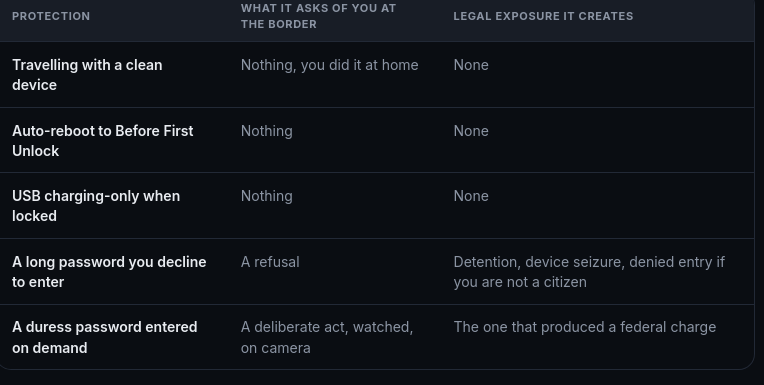
The top three cost you nothing and are invisible. The bottom one is the only row on this table that has ever turned a bad afternoon into a prosecution.A phone in Before First Unlock has never been unlocked since boot. Its keys are not in memory. It is the strongest state your device can be in, forensically, and reaching it costs one long-press before you join the queue.
So should you set a duress password?
This is not legal advice, and if you are in a situation where this question is live for you, the person to ask is a lawyer in your jurisdiction, before you fly rather than after.
With that said, an honest read:
If you already travel clean, it adds risk without adding protection. A device carrying nothing sensitive has nothing to destroy. You get the entire benefit of a wipe by simply not bringing the data, and none of the exposure.
Its real use case is coercion with no legal process at all. Robbery, kidnapping, a hostile actor with no warrant to seek and no court to answer to. In that scenario the calculus is completely different, and the feature is doing exactly what it was designed for.
The failure modes are worse than people expect. It is irreversible. It takes your eSIMs with it, which can leave you with no connectivity in a foreign country. Muscle memory under stress is unreliable, and the wrong finger on the wrong digit at the wrong moment ends the same way whether you meant it or not.
Having it set is not the same as using it. Nothing in this case suggests that configuring the feature is itself a problem. The alleged act was entering it after officers demanded access.
What to do instead
- Do not bring the data. This is the whole game, and it is covered properly in the border seizure guide. Everything else on this list is a rounding error next to it.
- Reboot before you reach the desk. One long-press puts the phone in Before First Unlock, which is free, invisible, and asks nothing of you later.
- Shorten the auto-reboot window. If a device is seized while locked, a 30-minute timer means it locks itself down hard long before anyone gets it to a lab.
- Leave USB on charging-only when locked. A plugged-in phone should not be able to talk to anything.
- Use a password, not your face. The Fifth Amendment picture for memorized passcodes is contested but real. For biometrics it is considerably weaker, and a fingerprint can be taken from you without your cooperation.
If you run a hardened Android build as your daily driver, the same logic applies more sharply, not less. Read the full-disk encryption guide for what encryption at rest does and does not cover, and see our mobile operating systems picks if you are choosing a platform.
The lesson
The technical protections in a modern hardened phone are genuinely excellent. Against thieves, against remote attackers, against ordinary forensic tooling, they hold up.
What they cannot do is fix a legal problem. And the feature that gets the most attention, the one that promises you a way out at the last second, is the only one that asks you to make an irreversible decision at the worst possible moment, in front of the person you are trying to stop.
Privacy that depends on you performing correctly while frightened, jet-lagged and outnumbered is not a plan. It is a bet. The protections worth having are the ones already in place before you walk up to the desk, which is why the right time to think about any of this is when you build your threat model, not when someone asks for your phone.
-
COLDCARD RNG Flaw Linked to $88.6M Bitcoin TheftA firmware bug in COLDCARD hardware wallets allowed attackers to recover wallet seeds and steal an estimated 1,367 BTC, worth about $88.6 million, from 4,585 Bitcoin addresses.

Affected COLDCARD firmware was supposed to use the STM32 hardware RNG (Random Number Generator) when creating wallet seeds. Instead, an integration error caused it to fall back to MicroPython’s deterministic Yasmarang pseudorandom number generator.
The fallback was seeded using values such as:
- Device identifiers
- System timing data
- Real-time clock values
- Previous RNG state
These values are not secure sources of cryptographic randomness. An attacker could generate possible wallet seeds offline, derive the related Bitcoin addresses, and compare them against funded addresses on the public blockchain. Once a match was found, the attacker could derive the private keys and move the funds.
The transaction pattern supports the theory of an automated attack. Many wallets were swept using the same unusually high fee rate, with no change outputs. The flaw affected several COLDCARD models and firmware versions, including older Mk2 and Mk3 devices and some Mk4, Mk5, and Q firmware releases. Fixed firmware is now available, but updating alone does not protect a seed that was generated by vulnerable firmware.
Affected users should:
- Install the fixed firmware
- Generate a new seed
- Verify the new wallet address
- Move funds to the new wallet
Sources:
- Block Bitcoin Engineering: Predictable RNG Fallback and 32-Bit Reseed in COLDCARD Firmware
https://engineering.block.xyz/blog/predictable-rng-fallback-and-32-bit-reseed-in-coldcard-firmware - Coinkite: COLDCARD Security Advisory
https://blog.coinkite.com/coldcard-mk3-seed-generation-warning/ - BleepingComputer: COLDCARD Wallet RNG Flaw Likely Linked to $88 Million Bitcoin Theft
https://www.bleepingcomputer.com/news/security/coldcard-wallet-rng-flaw-likely-linked-to-88-million-bitcoin-theft/ - Galaxy Research: Initial On-Chain Analysis of the Wallet Sweeps
https://x.com/glxyresearch/status/2083181683067506899
Sysadmin by day | Ethical hacker by night | Go Dev | hashpwn
3x RTX 4090 3x RTX 2080ti
Forum Rules -
Cisco ISE Zero-Day CVE-2026-76460 Actively ExploitedCisco has patched a CVSS 10.0 zero-day vulnerability in Identity Services Engine (ISE) that is already being actively exploited in the wild.
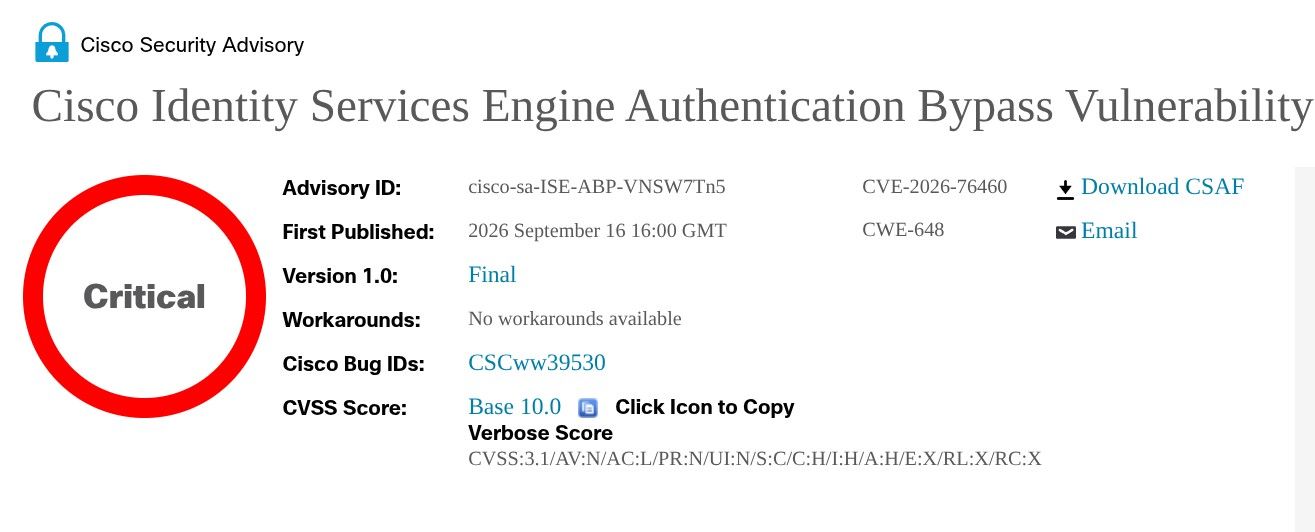
Tracked as CVE-2026-76460, the flaw affects Cisco ISE and ISE Passive Identity Connector (ISE-PIC). It allows a remote, unauthenticated attacker to bypass authentication by sending a specially crafted request to a vulnerable API endpoint.
Successful exploitation can ultimately allow an attacker to execute commands with root privileges on the affected system.
Cisco ISE is commonly used as a centralized network access and identity platform, controlling which users and devices are allowed to access enterprise networks. Compromising an ISE server could therefore give an attacker a powerful foothold inside an organization's security infrastructure.
Cisco discovered the vulnerability while investigating a Technical Assistance Center (TAC) support case and has confirmed that attackers are actively exploiting it.
CISA has also added CVE-2026-76460 to its Known Exploited Vulnerabilities (KEV) catalog.
Fixed versions include:
- ISE 3.1 Patch 12
- ISE 3.2 Patch 11
- ISE 3.3 Patch 12
- ISE 3.4 Patch 7
- ISE 3.5 Patch 4
There is no complete workaround. Cisco recommends immediately upgrading to a fixed release. Infrastructure ACLs can be used to restrict management and control-plane access as a temporary mitigation.
Administrators should also review ISE access logs and external firewall or network logs for suspicious activity. Because exploitation can result in root access, an attacker may be able to delete or hide evidence of compromise. Cisco recommends re-imaging affected nodes if malicious activity is suspected.
Affected users should:
- Upgrade immediately to a fixed ISE release
- Restrict ISE management access to trusted networks
- Review access, firewall, and network logs for suspicious activity
- Check every node in distributed ISE deployments
- Re-image systems if compromise is suspected
Sources:
- Cisco Security Advisory: Cisco Identity Services Engine Authentication Bypass Vulnerability
https://www.cisco.com/c/en/us/support/docs/csa/cisco-sa-ISE-ABP-VNSW7Tn5.html - CISA: Known Exploited Vulnerabilities Catalog
https://www.cisa.gov/known-exploited-vulnerabilities-catalog - BleepingComputer: Cisco Warns of Identity Services Engine Zero-Day Exploited in Attacks
https://www.bleepingcomputer.com/news/security/cisco-warns-of-identity-service-engine-zero-day-exploited-in-attacks/ - SecurityWeek: Active Exploitation Triggers Emergency Patch for Cisco ISE Zero-Day
https://www.securityweek.com/active-exploitation-triggers-emergency-patch-for-cisco-ise-zero-day/
Sysadmin by day | Ethical hacker by night | Go Dev | hashpwn
3x RTX 4090 3x RTX 2080ti
Forum Rules -
MetaMask Staking Infrastructure Breach Triggers Mass Validator Exits
MetaMask has disclosed an infrastructure security incident affecting its Ethereum staking operation, prompting the company to begin exiting thousands of validators as a precaution.
The incident does not appear to affect normal MetaMask wallets, seed phrases, or customer wallet funds. MetaMask says it has identified no immediate threat to MetaMask wallets.
Instead, the compromise involves MetaMask Staking, formerly Consensys Staking, which operates Ethereum validators for clients including Lido.
On-chain analysis found that an attacker was able to redirect block rewards from MetaMask-operated validators to an attacker-controlled wallet. Researchers identified 18 diverted payments totaling approximately 0.36 ETH.
Although the amount stolen was small, the attacker apparently gained enough access to change validator fee-recipient settings or otherwise cause validators to sign registrations pointing to the attacker.
MetaMask responded by exiting affected validators because potentially compromised Ethereum validator signing keys cannot simply be rotated.
Independent Bitquery analysis identified approximately 16,965 validators holding 565,056 ETH, worth roughly $1.5 billion at the time, that had exited or entered the exit queue. MetaMask has not officially confirmed those totals.
Importantly, the attacker could not simply withdraw the staked ETH because MetaMask does not control its clients' withdrawal keys. No validators were reported as slashed.
MetaMask has not yet disclosed how the attacker initially gained access or whether validator signing keys were actually stolen.
Sources:
- MetaMask: User Update - Infrastructure Security Incident
https://metamask.io/en-GB/news/user-update - Lido: MetaMask Staking Precautionary Out-of-Order Exits
https://research.lido.fi/t/security-disclosure-metamask-staking-precautionary-out-of-order-exits/11961 - BleepingComputer: MetaMask Discloses Security Incident Affecting Its Infrastructure
https://www.bleepingcomputer.com/news/security/metamask-discloses-security-incident-affecting-its-infrastructure/ - Bitquery: MetaMask Staking Incident - 17,000 Validators, 0.36 ETH
https://bitquery.io/investigations/metamask-staking-incident
Sysadmin by day | Ethical hacker by night | Go Dev | hashpwn
3x RTX 4090 3x RTX 2080ti
Forum Rules - MetaMask: User Update - Infrastructure Security Incident
-
Hacked Ledger Nano X Wallets Steal Seed Phrases Via SPI Bus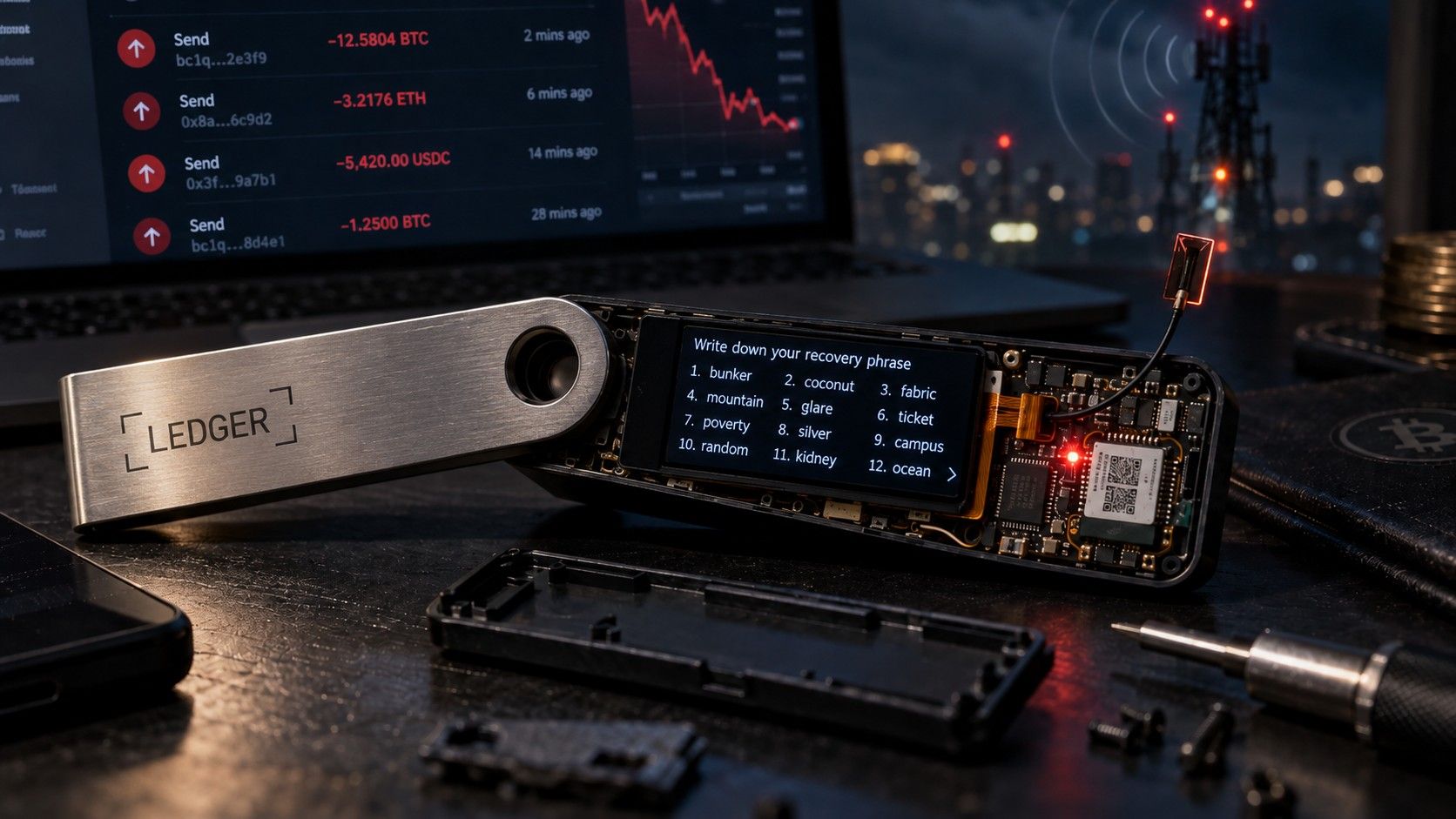
Security researchers have uncovered modified Ledger Nano X hardware wallets being sold that contain hidden cellular implants designed to steal user's 24-word recovery phrases.
Unlike traditional attacks targeting firmware or private keys, this attack intercepts the unencrypted SPI communication between the Ledger's secure element and OLED display. A hidden microcontroller monitors the display traffic, reconstructs recovery words from the transmitted pixels, and sends the stolen phrase to the attacker using a built-in LTE modem and eSIM.
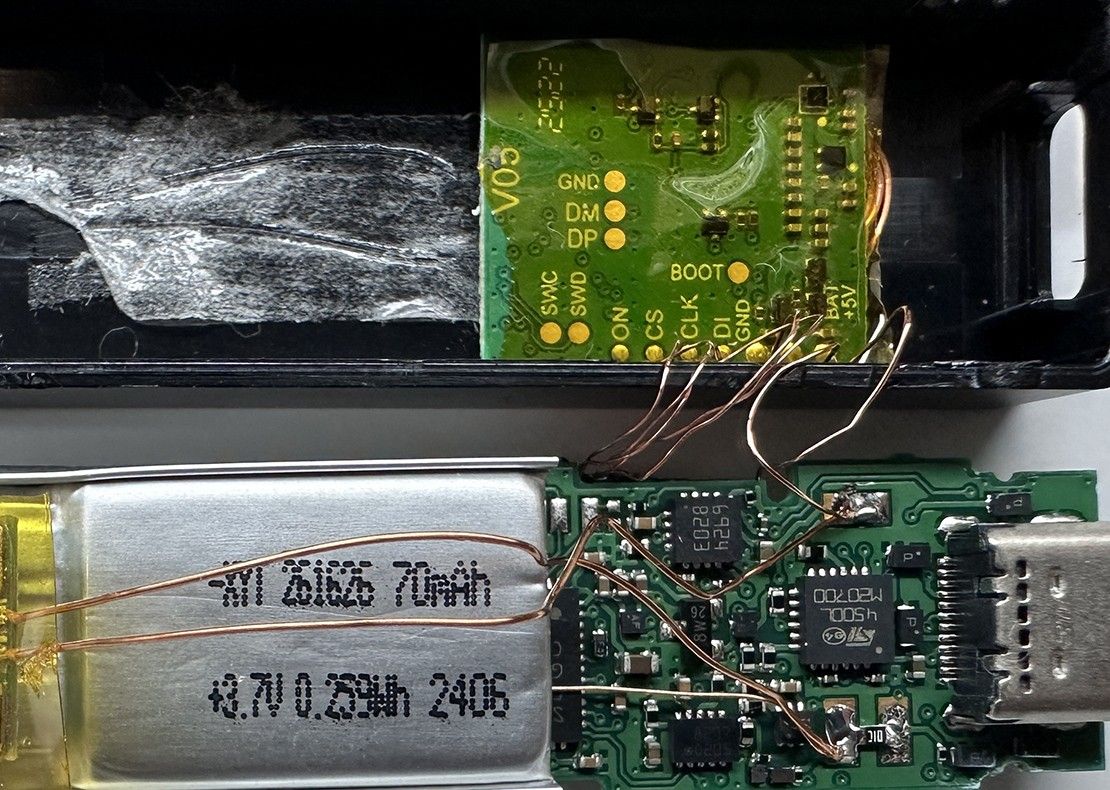
The secure element itself is never compromised. Because the underlying Ledger hardware remains genuine, the device can still pass Ledger Live's authenticity checks while silently exposing the recovery phrase.
Hardware hacker Joe Grand first reverse engineered one of these implants, presenting his findings at hardwear.io USA in May 2026. In September 2026, Tibane Labs examined two newer generations of the implant, showing how the attack has evolved from hand-soldered wires into sophisticated, purpose-built hardware.
The latest version uses a black-coated flexible PCB concealed beneath the OLED, a Nordic nRF9151 cellular module, an eSIM, and a custom antenna. The original battery remains untouched, and component markings have been deliberately removed to make identification more difficult.
The increasingly sophisticated designs suggest these implants are being developed for repeatable, potentially large-scale deployment rather than isolated experiments.
Separately, Ledger is investigating reports of cryptocurrency theft involving CryptoBilis, an authorized reseller operating in Southeast Asia. On-chain investigator Specter estimates that more than $86 million in Bitcoin, Ethereum, and Tron may have been stolen. Ledger has not confirmed those losses. Ledger has asked CryptoBilis to suspend sales and shipments while the investigation continues.
Importantly, researchers have not established a direct connection between the hardware implants and the reported CryptoBilis thefts. Ledger has not confirmed the cause of the losses. Ledger advises customers who purchased devices from CryptoBilis within the past 90 days not to initialize them. Customers who have already used these devices should consider transferring their assets to a trusted wallet with a newly generated recovery phrase.
Sources:
- Tibane Labs: Ledger Nano X: The Spy Implant
https://www.tibane.net/research/ledger-nano-x-implant - Grand Idea Studio: Reverse Engineering a Ledger Nano X Hardware Implant
https://grandideastudio.com/portfolio/security/ledger-hardware-implant/ - Ledger Support: Official CryptoBilis Investigation Statement
https://x.com/Ledger_Support/status/2108551100613714002 - The Block: Ledger Investigates Wallet Drains, Estimated Losses Exceed $86 Million
https://www.theblock.co/news/business/2026-10-09-ledger-cryptobilis-fund-losses-418163
Sysadmin by day | Ethical hacker by night | Go Dev | hashpwn
3x RTX 4090 3x RTX 2080ti
Forum Rules - Tibane Labs: Ledger Nano X: The Spy Implant
-
Binance Suffers Record Breaking $6.3 Billion Cryptocurrency Hack
On October 29, 2026, cryptocurrency exchange Binance suffered what appears to be the largest cryptocurrency hack in history, with approximately $6.3 billion stolen from exchange-controlled hot wallets across ten blockchain networks.
Preliminary investigations suggest the attack originated from a compromised DevOps engineer's laptop, providing unauthorized access to Binance's internal withdrawal infrastructure. Binance has since identified additional potential points of compromise, and the full attack mechanism remains under investigation.
On Ethereum, investigators identified the abuse of EIP-7702, which allows externally owned accounts to delegate execution to smart contracts. The attacker reportedly used a signed authorization to deploy an automated sweeping mechanism, repeatedly draining a Binance hot wallet as additional funds arrived.
Other affected blockchains showed cryptographically valid transactions, suggesting the attackers compromised Binance's internal transaction authorization or signing infrastructure rather than the underlying blockchain protocols. Binance reports no evidence that private keys were leaked.
Blockchain intelligence firms have attributed the attack with high confidence to TraderTraitor, a North Korean state-sponsored hacking group previously linked to the $1.5 billion Bybit hack in February 2025.
Approximately $3 billion in stolen assets have been frozen through cooperation with stablecoin issuers and blockchain partners. Binance has also announced that it has allocated over $6.34 billion in corporate funds to cover losses and protect customer balances.
Binance temporarily suspended withdrawals while securing its infrastructure and has pledged to publish a detailed technical post-mortem.
This incident serves as a reminder of the risks associated with custodial cryptocurrency wallets, where users entrust exchanges with control of their private keys and funds. Unlike non-custodial wallets, where users maintain direct control of their assets, custodial wallets expose users to centralized security breaches, exchange insolvency, and withdrawal restrictions.
As the saying goes, not your keys, not your coins.
Sources:
- Binance: Official Security Incident Statement
https://www.binance.com/en-TR/support/announcement/detail/c5a8729a97ac486d963784d96c5642d7 - TRM Labs: North Korea Steals $6.36 Billion From Binance
https://www.trmlabs.com/resources/blog/north-korea-steals-usd-6-36-billion-from-binance-in-the-largest-hack-in-history - Bitquery: Binance Hack, On-Chain Technical Investigation
https://bitquery.io/investigations/binance-hack - The Block: Binance Allocates $6.34 Billion to Cover Hack Losses
https://www.theblock.co/news/ecosystems/2026-10-30-binance-says-it-has-6-34-billion-ready-to-cover-hack-losses-432208
Sysadmin by day | Ethical hacker by night | Go Dev | hashpwn
3x RTX 4090 3x RTX 2080ti
Forum Rules - Binance: Official Security Incident Statement
-
SSHole - OpenSSH Authentication Bypass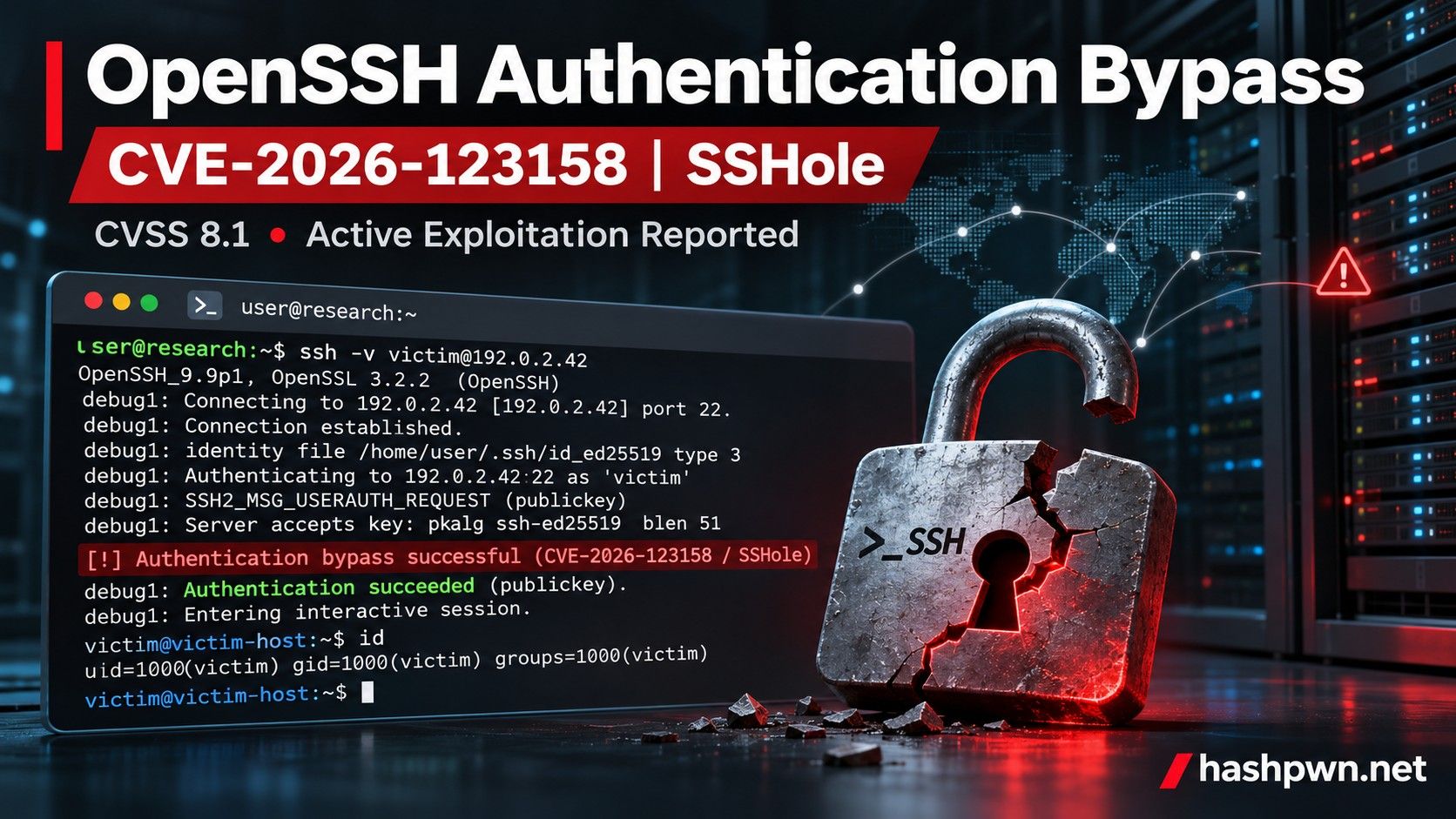
OpenSSH has patched a CVSS 8.1 high-severity authentication bypass vulnerability that allows remote, unauthenticated attackers to gain SSH access without knowing a valid password. The vulnerability is already being exploited in the wild.
Tracked as CVE-2026-123158 and nicknamed SSHole, the flaw affects OpenSSH servers running on Linux systems using musl libc without PAM authentication, including certain Alpine Linux installations.
The vulnerability stems from how OpenSSH handles password verification through musl's
crypt()function. Accounts configured without a password typically contain an asterisk (*) in theirshadowpassword field. When an oversized password is submitted, musl'scrypt()can return the same*character as an error indicator, which OpenSSH mistakenly interprets as a successful password match.Successful exploitation allows an attacker to authenticate to affected accounts using a password longer than 256 bytes, potentially gaining root privileges depending on the account configuration.
The attack requires password authentication to be enabled, an account with a
*password field, and at least one other account containing a compatible SHA-256 or SHA-512 password hash.Affected environments can include:
- Alpine Linux
- OpenWrt installations using OpenSSH
- Buildroot and Yocto systems using musl
- Other musl-based Linux systems running OpenSSH without PAM
Common glibc-based distributions, including Debian, Ubuntu, RHEL, and Fedora, are not affected by this particular vulnerability.
The issue was discovered by security researcher Özgün Kültekin of Wakefield and patched in OpenSSH 10.6p2 on November 5, 2026.
Threat intelligence firm Previdian has already observed exploitation attempts, with the first detected less than nine hours after public disclosure. Researchers also confirmed successful root access against an Alpine Linux honeypot, where the attacker executed system reconnaissance commands.
OpenSSH 10.6p2 contains the security fix. Alpine Linux has also released patched packages for affected versions dating back to Alpine 3.16.
Administrators should immediately update affected installations and restart the SSH daemon. Simply installing the updated package does not replace an already running vulnerable SSH process.
If updating is not immediately possible, setting
PasswordAuthentication noin the SSH server configuration and restartingsshdprevents exploitation.Affected users should:
- Upgrade OpenSSH to 10.6p2 or install their distribution's patched package
- Restart the SSH daemon after updating
- Disable SSH password authentication where possible
- Review SSH logs for successful password logins to accounts that should not accept passwords
- Investigate unauthorized account changes, SSH keys, and privilege escalation activity
- Treat systems as potentially compromised if suspicious authentication activity is discovered
Sources:
- OpenSSH: OpenSSH 10.6p2 Release Notes
https://www.openssh.org/txt/release-10.6p2 - Alpine Linux: OpenSSH Server Password Authentication Bypass Advisory
https://alpinelinux.org/posts/2026-11-05-openssh-password-authentication-bypass/ - Cloudflare: SSHole OpenSSH Password Bypass on musl Linux
https://radar.cloudflare.com/security/zero-wire/sshole - Help Net Security: OpenSSH Flaw Exploited in the Wild Just Hours After Disclosure
https://www.helpnetsecurity.com/2026/11/06/openssh-sshole-cve-2026-123158-exploitation/ - SecurityWeek: OpenSSH Rushes Patches for SSHole Authentication Bypass
https://www.securityweek.com/openssh-rushes-patches-for-sshole-authentication-bypass/
Sysadmin by day | Ethical hacker by night | Go Dev | hashpwn
3x RTX 4090 3x RTX 2080ti
Forum Rules -
Trezor Hardware Wallets Found Hacked With Cellular Implants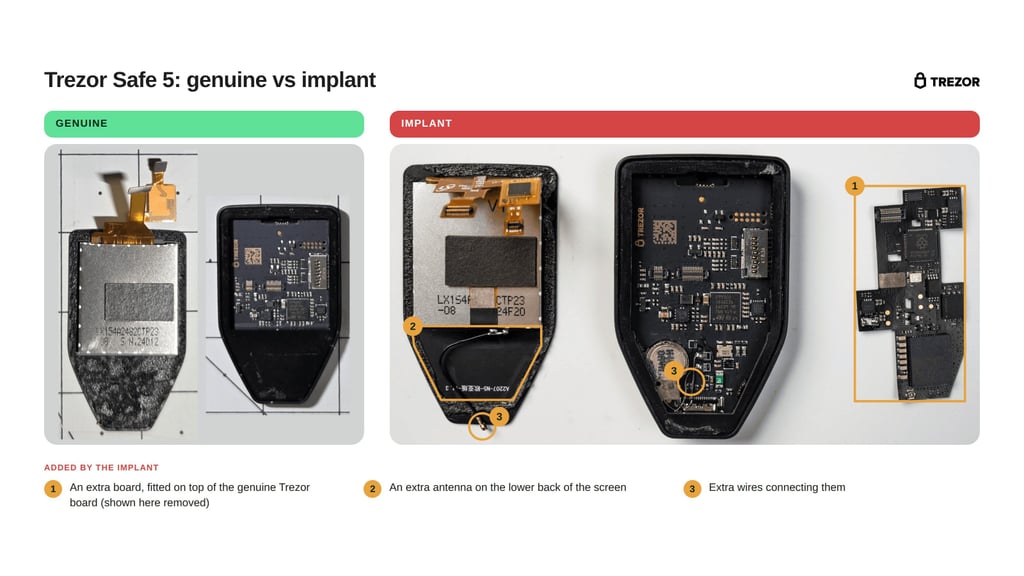
Cryptocurrency hardware wallet manufacturer Trezor has confirmed that three Safe 5 wallets sold through Southeast Asian reseller CryptoBilis contained malicious hardware implants designed to steal users' recovery phrases and transmit them to attackers over cellular networks.
Similar to the Ledger Nano X hardware implant attack previously reported here on hashpwn, these devices contain additional circuitry that intercepts communications between the wallet's main board and display without modifying the legitimate firmware or Secure Element.
Trezor's security team extracted and analyzed the implant's firmware, confirming that it monitors everything displayed or entered on the device's touchscreen. When recovery words appear during wallet initialization or restoration, the implant recognizes and captures them. It can also capture passphrases displayed on the screen.
The stolen information is encrypted and transmitted over a mobile network to an attacker-controlled server. If cellular connectivity is unavailable, the implant stores the captured data and continues attempting transmission until successful.
Like the previously discovered Ledger implants, the attack does not require compromising the wallet's Secure Element or installing malicious firmware. The underlying device remains genuine, while the additional hardware silently intercepts sensitive information.
The three compromised Trezor Safe 5 devices were purchased from CryptoBilis between August 20 and September 23, 2026. Trezor examined one device in its laboratory and identified two additional implants from photographs submitted by customers. So far, 48 customers have contacted Trezor following its initial warning in October.
Interestingly, CryptoBilis is the same reseller involved in the recent Ledger hardware wallet attacks, where similar cellular implants were discovered and linked to cryptocurrency thefts. This suggests a broader supply-chain compromise affecting multiple hardware wallet manufacturers, although the attackers and exact point of tampering have not been publicly identified.
On November 11, Trezor released firmware version 2.13.1, which the company says prevents the identified implants from capturing information, effectively neutralizing the current generation of malicious hardware. However, the update cannot protect recovery phrases that may have already been stolen.
In response to the incident, Trezor has reduced its global reseller network by approximately 80% and introduced stricter requirements for its remaining authorized resellers.
As of November 12, Trezor has received no reports of stolen funds involving the compromised Safe 5 wallets, and no implants have been confirmed in other Trezor models or devices from other resellers.
Trezor advises anyone who purchased a device from CryptoBilis since March 2026 to transfer their funds to a trusted wallet using a newly generated recovery phrase. Affected customers are also eligible for a replacement device, even if their original wallet has not been confirmed as compromised.
Sources:
- Trezor: Official CryptoBilis Investigation and Technical Findings
https://trezor.io/blog/news/our-cryptobilis-investigation-what-we-found-and-what-weve-changed - BleepingComputer: Trezor Confirms Crypto-Stealing Implants in Three Wallets
https://www.bleepingcomputer.com/news/cryptocurrency/trezor-confirms-crypto-stealing-implants-in-three-wallets-releases-fix/ - The Hacker News: Trezor Confirms Hidden Hardware Implants
https://thehackernews.com/2026/11/trezor-confirms-hidden-hardware.html - hashpwn: Hacked Ledger Nano X Wallets Steal Seed Phrases Via SPI Bus
https://forum.hashpwn.net/post/17671
Sysadmin by day | Ethical hacker by night | Go Dev | hashpwn
3x RTX 4090 3x RTX 2080ti
Forum Rules - Trezor: Official CryptoBilis Investigation and Technical Findings
-
Japan's Fugaku Supercomputer Taken Offline Following Cyberattack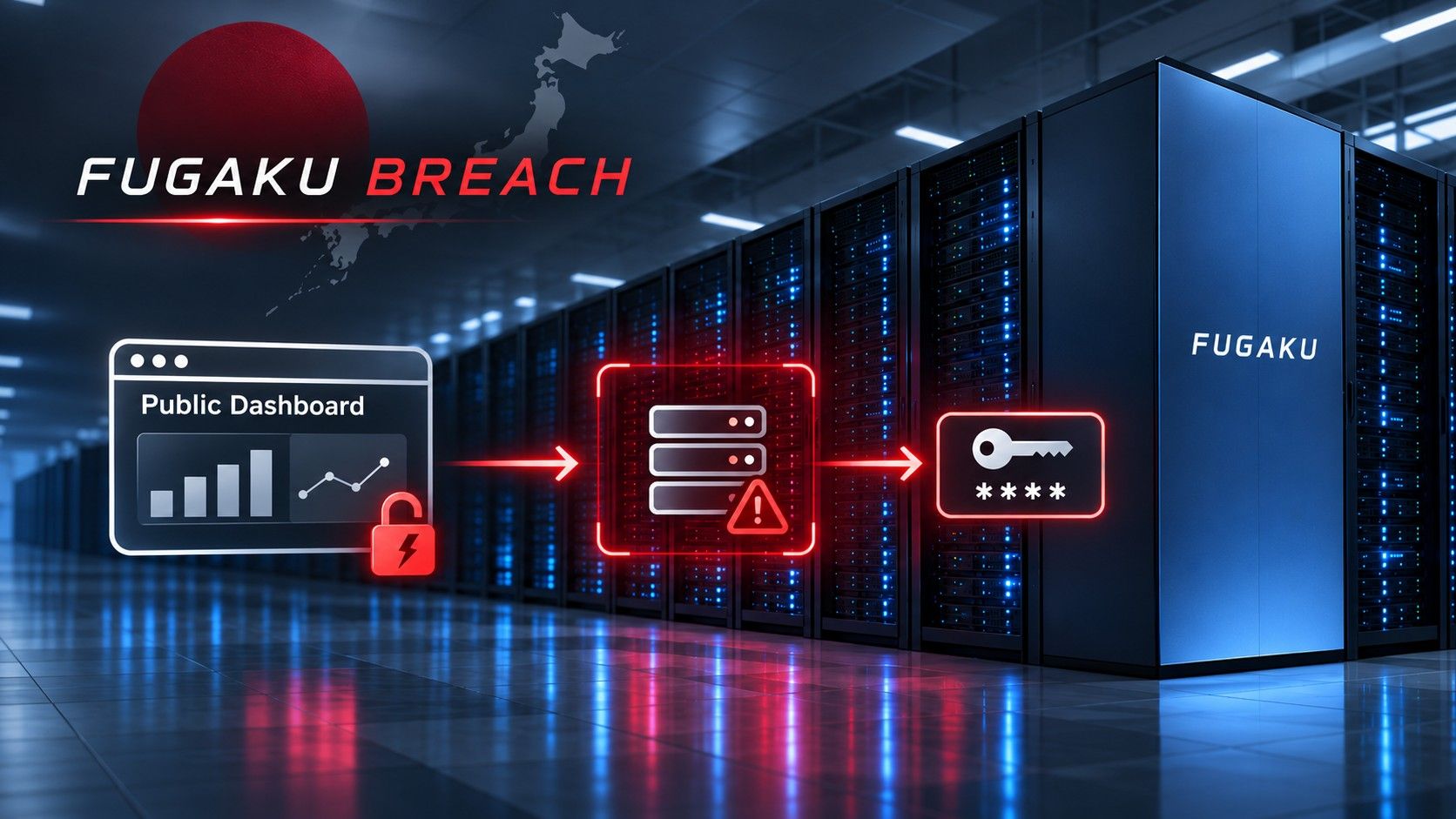
Japan's RIKEN Center for Computational Science has shut down its Fugaku supercomputer following a cyberattack that compromised multiple internal servers and exposed user credentials, including SSH private keys and research data.
Fugaku is one of the world's fastest supercomputers, featuring 158,976 compute nodes, over 7.6 million CPU cores, and a theoretical peak performance of 537 petaflops. The system is used for scientific research, including medical research, climate modeling, and advanced simulations.
According to RIKEN, attackers gained access between November 10 and 13 through a publicly accessible web dashboard displaying Fugaku's operational status. From there, they penetrated the internal operational network, compromised multiple servers, and installed malicious software.
The attackers accessed information stored in the user authentication system and files within users' home directories. Up to 4,597 users may have been affected, including 4,222 Fugaku users and 375 users of RIKEN's newer RIKYU supercomputer.
The exposed information includes names, email addresses, user IDs, research files, SSH private keys, and other authentication credentials used to access external systems.
More concerning, RIKEN confirmed that the attackers attempted to use some of the stolen credentials to access additional systems. This creates the possibility of the attack spreading to other research institutions and computing environments that trusted those credentials.
RIKEN detected suspicious network traffic on November 12, confirmed unauthorized access on November 13, and shut down Fugaku on November 14. All running and queued computational jobs were subsequently halted.
In response, RIKEN invalidated all user login public keys, replaced administrative keys, and instructed users to revoke and regenerate any SSH keys or other credentials stored on Fugaku. Compromised servers will be rebuilt, software vulnerabilities addressed, and network security reviewed before operations resume.
Interestingly, the initial entry point was not the supercomputer itself, but a publicly accessible monitoring dashboard. The attackers were able to move from that interface into internal operational systems containing sensitive user information and authentication credentials.
The exact vulnerability exploited, malware capabilities, and identity of the attackers have not been disclosed. Although credential theft and attempts to access additional systems have been confirmed, RIKEN has not established whether those attempts succeeded or whether research results were exfiltrated.
The investigation remains ongoing, and RIKEN has not announced when Fugaku will return to normal operations.
Sources:
-
RIKEN: Official Security Incident Disclosure
https://www.riken.jp/en/news_pubs/news/2026/20261116_2/index.html -
BleepingComputer: Japan Takes Fugaku Supercomputer Offline After Cyberattack
https://www.bleepingcomputer.com/news/security/japan-takes-fugaku-supercomputer-offlline-after-cyberattack/
Sysadmin by day | Ethical hacker by night | Go Dev | hashpwn
3x RTX 4090 3x RTX 2080ti
Forum Rules -
-
RealVNC Releases Security Updates for Undisclosed Vulnerability
RealVNC has released security updates for multiple remote access applications after discovering a vulnerability affecting its Viewer, Server, and Connect software across all supported operating systems.
The company notified customers on November 19, 2026, urging administrators to update their installations as soon as possible.
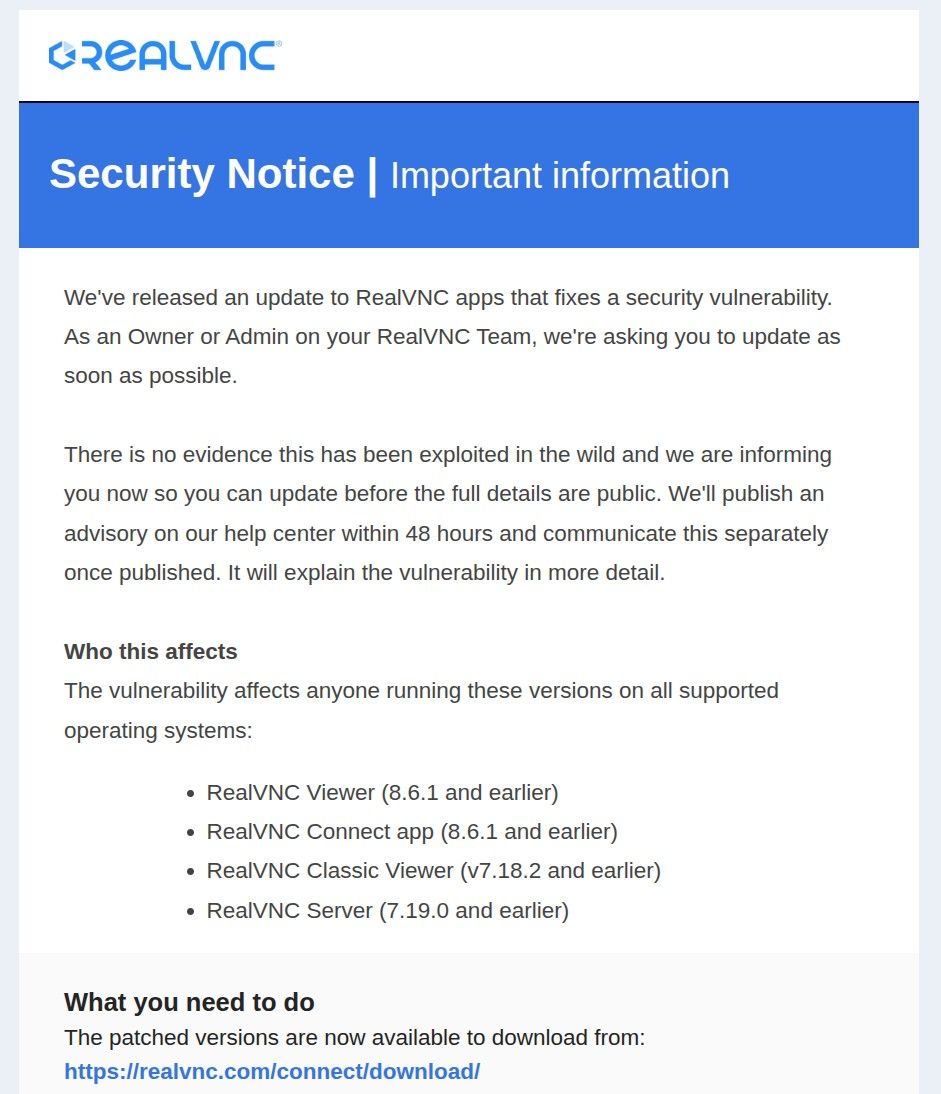
RealVNC has not yet disclosed the technical details of the vulnerability, including its severity, attack vector, or whether exploitation requires authentication. No CVE identifier has been announced.
According to RealVNC, there is currently no evidence the vulnerability has been exploited in the wild. The company plans to publish a detailed security advisory within 48 hours, allowing customers time to install the updates before technical details become public.
Affected versions and their patched replacements include:
- RealVNC Viewer 8.6.1 and earlier: Update to 8.6.2
- RealVNC Connect 8.6.1 and earlier: Update to 8.6.2
- RealVNC Classic Viewer 7.18.2 and earlier: Update to 7.18.3
- RealVNC Server 7.19.0 and earlier: Update to 7.19.1
The vulnerability affects both client and server applications, although RealVNC has not confirmed whether the issue involves shared components or multiple attack surfaces.
RealVNC is widely used for remote desktop access, including unattended access to servers and workstations. Depending on the nature of the vulnerability, compromised remote access software could potentially expose sensitive systems.
Administrators should prioritize updating affected installations, particularly systems providing remote access to production environments.
Recommended actions:
- Update all affected RealVNC applications to their patched versions
- Prioritize unattended servers and remotely accessible systems
- Restrict VNC access to trusted networks where possible
- Verify downloaded installers against RealVNC's published SHA-256 checksums
- Review RealVNC's forthcoming advisory for additional mitigation requirements
The updates are available directly from RealVNC's official website.
Sources:
- RealVNC: Known Security Vulnerabilities
https://help.realvnc.com/hc/en-us/articles/360002478311-Are-there-any-known-security-vulnerabilities
Sysadmin by day | Ethical hacker by night | Go Dev | hashpwn
3x RTX 4090 3x RTX 2080ti
Forum Rules




Hello! It looks like you're interested in this conversation, but you don't have an account yet.
Getting fed up of having to scroll through the same posts each visit? When you register for an account, you'll always come back to exactly where you were before, and choose to be notified of new replies (either via email, or push notification). You'll also be able to save bookmarks and upvote posts to show your appreciation to other community members.
With your input, this post could be even better 💗
Register Login